


 English
  Español
  中文简体
中文简体
Product Consultation
Your email address will not be published. Required fields are marked *
Cold Heading Agricultural Machinery Parts: A Foundation for Durability
Aug 06,2025What should you know about synchronizer guide block assembly?
Aug 06,2025Why Bus Gearbox Parts Are Critical for Vehicle Performance?
Aug 06,2025Commercial Vehicle Gearbox Parts: A Comprehensive Guide to Market Trends and Maintenance
Aug 06,2025In the modern automotive industry, transmission components are a core component that ensures efficient power transmission and stable handling. The design of the transmission system not only directly impacts a vehicle's acceleration, fuel economy, and comfort, but also plays a decisive role in the reliability and lifespan of the entire vehicle. Whether it's a manual transmission, an automatic transmission, or the latest dual-clutch and continuously variable transmission systems, their core components are constantly being optimized to meet the high performance, energy efficiency, and environmental standards demanded by modern vehicles.
Composition and Function of Transmission Components
Transmission system components primarily include gears, shafts, clutches, differentials, various synchronizers, and bearings. These components work together to transmit engine power to the wheels, enabling the vehicle to move. Each component performs a specific function within the system. Gears achieve speed and torque conversion through precise meshing, clutches manage power separation and engagement, differentials coordinate wheel speed differences during cornering, and bearings ensure stable support and low-friction operation of rotating parts.
In modern vehicles, the precision and material selection of transmission components directly impact transmission efficiency. High-strength steel and lightweight alloys are widely used in gears and shafts, improving wear resistance and strength while reducing overall weight and contributing to vehicle energy efficiency. Furthermore, the integration of high-performance lubrication systems is crucial for ensuring the long-term and stable operation of transmission components, effectively reducing friction and wear and extending service life.
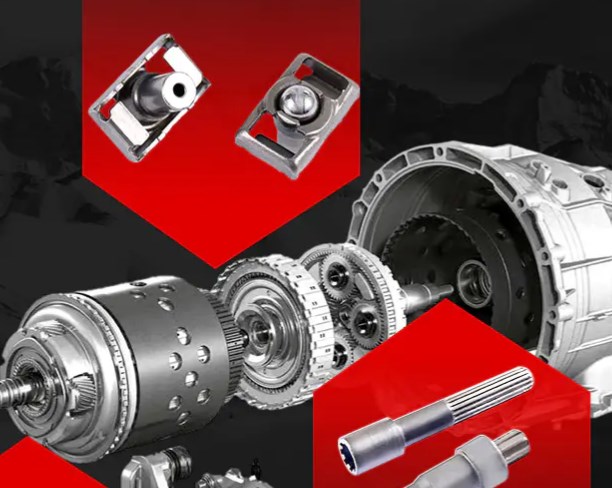
Design Optimization of High-Performance Gears and Shafts
Gears and shafts are the most important load-bearing components in the transmission system, with complex designs and extremely high precision requirements. With the improvement of powertrain performance, gear mesh strength, torque transmission capacity, and noise control have become key areas of design optimization. Advanced gear processing technologies, such as precision grinding and quenching, not only improve gear wear resistance but also significantly reduce meshing noise, providing a more comfortable driving experience for passengers.
Bearing and shaft design is also undergoing continuous innovation. By optimizing shaft cross-sectional structure and material hardness, transmission systems can achieve lightweight designs while maintaining strength. This is particularly important for new energy vehicles, as reducing vehicle weight directly affects range and energy efficiency. The stability of bearings under high speed and high load conditions is also a key factor affecting the overall reliability of the transmission system. The selection of precision bearings and optimized lubrication solutions are key measures to ensure smooth power transmission.
The Collaborative Effect of Clutches and Synchronizers
The clutch, in the transmission components, performs the functions of power cutoff and engagement and is crucial for both manual and automatic transmissions. The clutch's response speed, friction material properties, and heat dissipation capacity directly impact driving smoothness and handling. Modern clutch systems utilize advanced friction materials and optimized spring designs to achieve faster power response and longer service life.
The synchronizer ensures smooth gear shifting. Its precision and material properties directly determine shifting smoothness and durability. High-performance synchronizers maintain stable engagement under high-speed shifting and high torque conditions, reducing shift shock and improving driving comfort. This high-precision design is crucial not only for traditional vehicles but also for the multi-speed transmissions used in new energy vehicles, enabling efficient power transmission within limited space.
The Comprehensive Impact of Transmission Components on Automotive Performance
Transmission system components are more than just a bridge for power transmission; their design and material selection directly impact the vehicle's power performance, fuel economy, and ride comfort. Precision-engineered gears and shafts reduce energy loss, high-performance clutches and synchronizers enhance shifting smoothness, and advanced materials and lubrication technologies extend component life. Furthermore, the combination of lightweighting and intelligent control has significantly improved the performance, environmental friendliness, and reliability of modern vehicles.
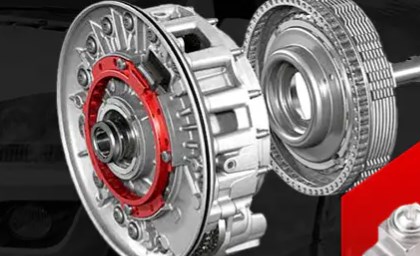
Amidst increasingly fierce competition in the global automotive industry, high-quality transmission components are not only a crucial factor in enhancing the competitiveness of automakers but also crucial in meeting consumer demands for a superior driving experience and energy efficiency. With continuous technological advancements, innovations in transmission system components will continue to drive the automotive industry towards efficiency, intelligence, and greener development.
Your email address will not be published. Required fields are marked *

(+86)-191 0581 0729
(+86)-137 5830 1558