


 English
 Español
 中文简体
Product Consultation
Your email address will not be published. Required fields are marked *
Cold Heading Agricultural Machinery Parts: A Foundation for Durability
Aug 06,2025What should you know about synchronizer guide block assembly?
Aug 06,2025Why Bus Gearbox Parts Are Critical for Vehicle Performance?
Aug 06,2025Commercial Vehicle Gearbox Parts: A Comprehensive Guide to Market Trends and Maintenance
Aug 06,2025A DCT synchronizer ring is the cone-shaped friction component that matches two shaft speeds before a dog clutch locks in a dual-clutch transmission. In a wet-clutch DCT it works fully submerged in oil and absorbs most of the sliding heat from every gear change; in a dry-clutch DCT it does the same job with far less cooling. Either way, this ring is the first part in the synchronizer pack to reach its wear limit.
By 100,000 km of mixed use, a manganese brass DCT synchronizer ring typically loses 0.15 to 0.30 mm of friction face thickness. That loss appears as delayed 2-3 upshifts, harsher downshifts, and finally a grinding engagement that forces a full overhaul. Knowing what the dual-clutch gearbox component set demands from a ring, which material fits your duty cycle, and which measurements matter at incoming inspection separates a 300,000 km gearbox from a 120,000 km repair bill.
A DCT synchronizer ring performs the same basic function as a manual transmission ring, but under tighter timing, a different lubrication regime, and far more frequent actuation. In a manual gearbox the driver controls engagement speed; in a DCT the control unit preselects the next gear and fires the shift within a few hundred milliseconds, so the ring must develop full synchronizing torque almost instantly.
Three operating conditions define DCT ring duty:
Because of this duty profile, DCT ring failures appear earlier than MT ring failures with identical material. The first detectable sign is a 0.2 to 0.4 second delay in the 2-3 or 4-5 upshift, followed by a metallic clatter on downshifts into second gear.
The ring never works alone inside a DCT. The hub, slider, guide block, and strut jointly control axial clamping force and release timing, so a new ring on a worn slider assembly still shifts poorly. That is why overhaul kits ship as a complete synchronizer pack rather than individual cones.
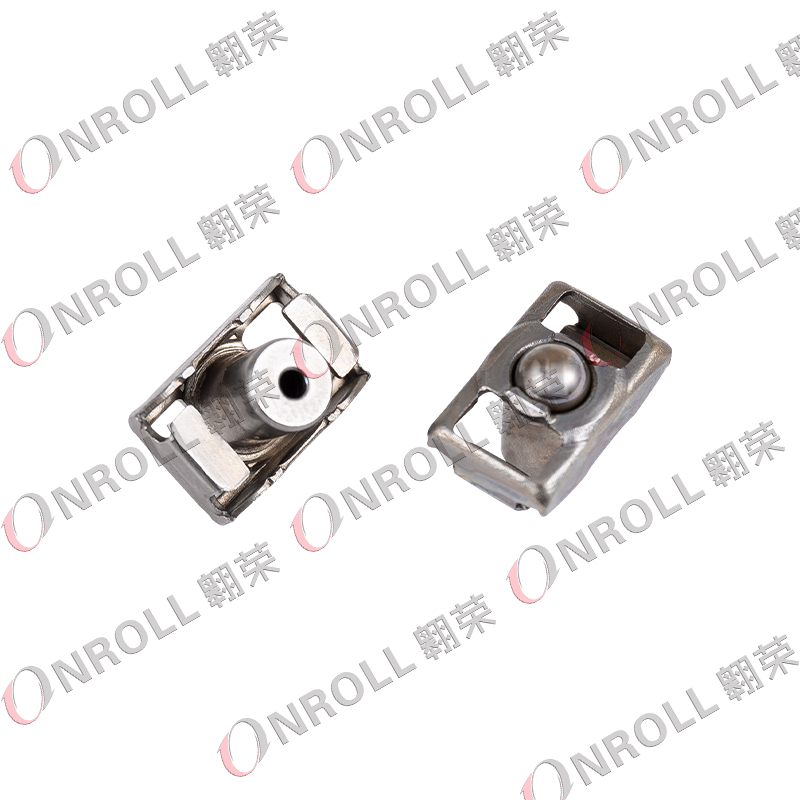 Synchronizer Slider Assembly for DCT Overhaul KitsThis stamped slider assembly is part of a complete synchronizer pack, ensuring stable spring elasticity and smoother gear changes when replacing worn DCT ring components.View Product →
The material of a DCT synchronizer ring is the single strongest predictor of overhaul interval. Three families dominate: manganese brass for cost-driven original equipment, sintered steel for medium-duty passenger cars, and resin-bonded carbon for high-torque and hybrid applications.
| Property | Manganese brass | Sintered steel | Carbon-faced |
| Friction coefficient in oil bath | 0.06-0.08 | 0.08-0.11 | 0.10-0.13 |
| Relative wear life | Baseline | 1.5-2x | 3-5x |
| Continuous heat limit | 180 C | 260 C | 350 C |
| Relative piece cost | 1.0x | 1.3-1.6x | 2.5-4x |
| Typical DCT application | Economy models | Mid-size sedans | Performance and hybrid |
Higher friction coefficient shortens synchronizing time but requires matching clutch calibration to avoid shift harshness.
Manganese brass remains the volume choice because the cone is turned in one operation and its frictional behaviour stays stable across temperature. The trade-off is three to five times shorter life under sustained heat. Carbon-faced rings last longest but add adhesive bond complexity and cost, which limits them to high-access-cost applications. Sintered steel sits between them and suits moderate-torque DCTs with long service intervals.
DCT synchronizer ring production combines forming, precision machining, and friction surface treatment, and the process determines the tolerances you can expect. The typical route for a brass ring uses cold-forming or forging for the blank, then CNC turning, cone profiling, slot cutting, and final surface treatment.
Cold-formed parts show better grain flow than parts machined from solid bar, so a supplier with cold-heading capability has a clear process advantage. Cone runout matters most: a ring that rocks on the gear cone concentrates load on one side and wears fast. IATF 16949-certified plants such as Jiaxing OnRoll Machinery Co., Ltd. document this with a dimensional report per lot, the minimum evidence a buyer should accept before committing a high-volume program.
At overhaul, a DCT synchronizer ring should be assessed with a bore gauge, a surface plate, and a dye-check kit, not by eye. The accepted wear limit for most brass rings is 0.20 mm of step wear at the cone edge; beyond that, the ring cannot develop the torque needed to bring the input shaft into synchronization, even if the friction surface still looks acceptable.
When a ring fails, the guide block and slider in the same pack should be replaced together. A worn guide block changes the axial clearance, so the new ring can tilt on its cone and fail again within 10,000 km; ignoring the mechatronic shift calibration produces the same result.
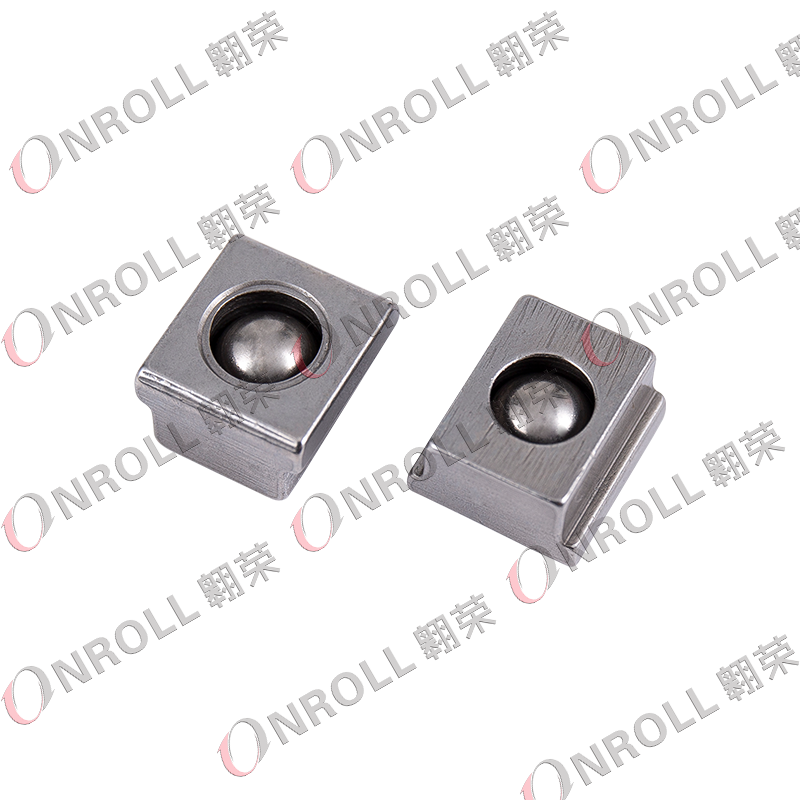 Synchronizer Guide Block Assembly with Integrated Steel BallCold-drawn steel guide block with a steel-ball slider reduces shift resistance, making it a reliable companion when replacing synchronizer rings in any synchronized gearbox.View Product →
Procurement of DCT synchronizer rings fails when the buyer specifies only the outer diameter and tooth count. A complete sourcing specification must cover material grade, cone geometry, friction lining, surface finish, dimensional tolerances, and batch traceability from ingot to finished part.
Suppliers that already produce the surrounding synchronizer hardware are easier to qualify than ring-only shops, because they can hold mating tolerances between the ring, slider, guide block, and hub in one plant. For a full gearbox program, an OEM production partner with cold-heading, CNC machining, and in-house gauging shortens the approval cycle and removes tolerance stacking between vendors.
The cheapest DCT synchronizer ring is rarely the cheapest gearbox. Budget for the complete synchronizer pack, verify the supplier's cone gauge records, and confirm that the mechatronic calibration matches the new friction coefficient before committing to a volume order.
In normal city and highway use, a manganese brass ring typically lasts 100,000 to 150,000 km before step wear reaches 0.20 mm, while carbon-faced rings exceed 200,000 km. Life depends on oil change intervals, driving style, and clutch slip frequency.
No. Cutting the cone to remove wear changes the cone angle and the ring's axial position in the pack, so it will not generate the required synchronizing torque. Rebuilding the friction surface requires a new coating layer that a workshop cannot apply reliably.
The ring is the friction cone that matches shaft speeds; the hub is the toothed core on which the sliding sleeve moves. They work together, but wear rates differ: the ring wears from friction, while the hub wears mainly through spline fretting and is usually reused at the first overhaul.
When the ring is new but the slider, guide block, or clutch calibration is out of specification, the axial clamping force is wrong. The mechatronic unit controls shift force, so a new ring with a different friction coefficient needs a matching hydraulic calibration; replacing only the mechanical part will not solve the symptom.
Your email address will not be published. Required fields are marked *

(+86)-191 0581 0729
(+86)-137 5830 1558