


 English
  Español
  中文简体
中文简体
Product Consultation
Your email address will not be published. Required fields are marked *
Cold Heading Agricultural Machinery Parts: A Foundation for Durability
Aug 06,2025What should you know about synchronizer guide block assembly?
Aug 06,2025Why Bus Gearbox Parts Are Critical for Vehicle Performance?
Aug 06,2025Commercial Vehicle Gearbox Parts: A Comprehensive Guide to Market Trends and Maintenance
Aug 06,2025In modern public transportation systems, the performance stability of buses is inextricably linked to passenger comfort, and the gearbox, as the core component of power transmission, plays a crucial role. Bus gearbox parts have a complex structure, and their technological level directly affects the vehicle's power efficiency, fuel economy, and ride smoothness.
The Core Role of the Gearbox in the Bus Powertrain System
The bus powertrain system consists of an engine, gearbox, drive shaft, and drive axle. As the hub of power transmission, the gearbox is responsible for optimally transmitting the engine's power to the wheels. Under different driving conditions, gearbox components coordinate to achieve efficient power conversion and torque matching, thereby ensuring smooth operation of the bus on urban roads and highways. High-quality gearbox components not only improve fuel economy but also extend the overall vehicle lifespan.
Precise Matching of Driving and Driven Gears
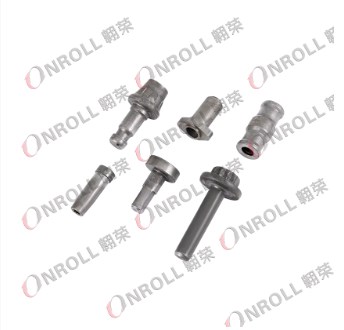
The core components of a bus gearbox include the driving gear, driven gear, gear shaft, and synchronizer. The driving gear is directly connected to the engine, transmitting mechanical energy to the driven gear, resulting in amplified or reduced torque output. Gear meshing precision directly impacts shift smoothness. The application of high-precision machining and surface treatment technologies ensures gears maintain low noise and high wear resistance even under high loads. Simultaneously, the synchronizer design guarantees rapid speed matching between gears, maintaining a smooth shifting experience even during frequent starts, stops, or lane changes in buses.
Torque Converter and Clutch Assembly Collaboration
In automatic or semi-automatic bus transmissions, the hydraulic torque converter and multi-plate clutch are key components. The hydraulic torque converter achieves a flexible connection between the engine and transmission through hydraulic coupling, smoothing starts and reducing impact loads. The clutch assembly plays a role in load bearing and disengagement during shifting; its friction plate material and heat dissipation performance directly affect the transmission's durability. The application of advanced materials, such as high-strength alloys and composite friction materials, not only improves transmission efficiency but also enhances stability under long-term urban operating conditions.
Gear Shaft and Bearing Durability Design
Gear bearings are crucial structures supporting gear rotation and bearing torque transmission. Bus transmissions typically use high-precision rolling bearings or tapered roller bearings. The selection of bearings, the thickness of the lubricating oil film, and the sealing performance are key factors in ensuring the long-term stable operation of the transmission. Under high load and frequent shifting conditions, the wear resistance and fatigue resistance of the bearings determine the lifespan of the entire transmission system. Simultaneously, a well-designed gear shaft can effectively distribute stress, reduce vibration and noise, thereby improving the overall vehicle ride quality.
The Importance of the Lubrication System The operation of a transmission relies heavily on a robust lubrication system. Bus transmissions use oil pumps to circulate lubricating oil, providing a stable oil film protection for gears, bearings, and synchronizers, reducing friction and heat accumulation. The viscosity and oxidation resistance of the lubricating oil are crucial to the lifespan of components and the smoothness of shifting. Modern bus transmissions employ multi-stage filtration and cooling designs to ensure excellent performance even under high-temperature and high-load conditions.
Control Systems and the Trend Towards Intelligence With the development of new energy buses and intelligent transportation, transmission components are highly integrated with electronic control systems. Electronic shifting mechanisms, sensors, and control units work together to optimize shifting logic and power matching control. This intelligent transmission not only improves driving comfort but also optimizes fuel economy and emissions performance. Precise monitoring and feedback control of components extend maintenance cycles and reduce operating costs.
The Supporting Role of Materials and Processes in Performance: Bus gearbox components have stringent requirements in material selection and processing techniques. Gears are mostly made of alloy steel with carburizing or tempering treatment to improve strength and wear resistance. Bearings and gear shafts employ high-precision machining and heat treatment processes to ensure reliability under high torque conditions. Advanced surface treatment technologies and precision machining enable components to maintain accuracy and performance over long-term use, providing a solid guarantee for the safe operation of buses.
As the core of the vehicle's power transmission, the design, manufacturing, and operation of bus gearbox parts directly affect the vehicle's power performance, fuel economy, and passenger comfort. From gears, bearings, and clutches to the lubrication system, each component performs a crucial function. With the development of materials, processes, and intelligent technologies, bus gearbox components are continuously upgrading towards high efficiency, durability, environmental friendliness, and intelligence, providing solid support for modern public transportation systems.
Your email address will not be published. Required fields are marked *

(+86)-191 0581 0729
(+86)-137 5830 1558