


 English
 Español
 中文简体
Product Consultation
Your email address will not be published. Required fields are marked *
Cold Heading Agricultural Machinery Parts: A Foundation for Durability
Aug 06,2025What should you know about synchronizer guide block assembly?
Aug 06,2025Why Bus Gearbox Parts Are Critical for Vehicle Performance?
Aug 06,2025Commercial Vehicle Gearbox Parts: A Comprehensive Guide to Market Trends and Maintenance
Aug 06,2025A 2021 DCT hatchback arrives at the shop with a metallic crunch on the 2-3 upshift and a gear indicator that hesitates before confirming engagement. The first assumption is clutch wear, but clutch fill times measure normal. The actual source is the DCT gearbox synchronizer, a compact friction assembly inside the transmission that is too often diagnosed last and replaced too late.
A DCT gearbox synchronizer equalizes the rotational speed of a target gear and its input shaft before the dog teeth engage, making it the component that controls shift speed and shift quality in a dual-clutch transmission.
In a DCT, the synchronizer works differently than in a manual gearbox because the clutches handle launch and torque interruption, but they cannot equalize the speeds of two rotating gear sets within a few hundred milliseconds. That speed-matching task falls to the synchronizer, which completes it in four phases:
Each DCT input shaft carries its own synchronizer set. Odd gears ride on one shaft, even gears on the other, which lets the transmission preselect the next gear while the current one is still engaged. That preselect routine keeps the synchronizer in motion long before the shift command is sent, a condition that changes how wear develops compared with manual gearboxes.
Core definition: A DCT gearbox synchronizer is a friction-based speed-matching assembly that brings a gear and its shaft to the same rotational speed before dog-tooth engagement, completing this cycle dozens of times per minute under continuous oil flow.
On a typical wet DCT, the synchronizer receives pressurized oil at 8-12 bar and must complete a synchronization event in 100-250 milliseconds. On a dry DCT, the window extends to 250-350 milliseconds with a thinner oil film and higher surface temperatures.
For rebuild programs, the synchronizer slider is the highest-wear component in the assembly stack and the one that determines whether the unit can hold its shift-time budget.
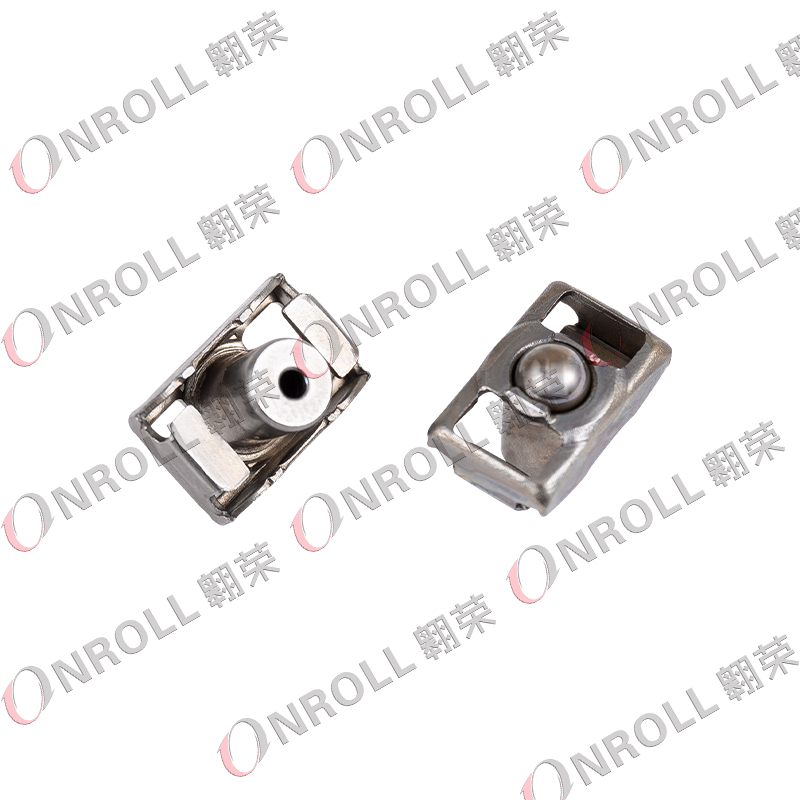 Stamped Synchronizer Slider Assembly for TransmissionsThis slider is a high-wear component in rebuild stacks, with stable dimensions and spring elasticity from step-in die stamping. It suits passenger cars and light trucks, helping maintain shift-time budgets.View Product →
DCT synchronizers and manual gearbox synchronizers perform the same basic function, but DCT units operate with shorter shift windows, higher actuation forces, and continuous pumped oil flow, which produces a fundamentally different wear profile.
Many technicians assume a synchronizer is a synchronizer until a DCT comes back with a failed replacement. The table below lists the parameters that matter most for diagnosis and part selection.
| Parameter | Manual gearbox | DCT gearbox |
| Shift time budget | 300-600 ms | 100-250 ms |
| Actuation source | Driver force through fork | Hydraulic piston, 500-800 N |
| Oil environment | Splash lubrication | Continuous pump-fed oil |
| Dominant wear driver | Shift habit, clutch slip | Oil contamination, heat |
| Cone design | Single or double cone | Double or triple cone |
Two differences matter most in practice. First, hydraulic actuation applies force at a consistent rate in a DCT, so aggressive driving alone does not cause synchronizer wear; instead, thermal and contamination loads dominate. Second, the synchronizer is used in every shift, including paddle shifts and automatic mode, giving it roughly three times the duty cycle of a manual gearbox synchronizer over the same mileage.
A DCT synchronizer is a wear item with a defined service life. Skipping its condition check during a clutch replacement is the leading cause of premature DCT rebuild failures.
More than 80 percent of DCT synchronizer failures concentrate in three components: the friction cone, the slider or strut, and the return spring, and each has a distinct failure signature.
Field return data from transmission repair networks and component suppliers shows a consistent distribution of wear across synchronizer assemblies.
Distribution of wear across 214 warranty-returned DCT synchronizer assemblies, 2023-2025 field service records.
The friction cone loses its friction lining through normal sliding contact. Once the lining is gone, metal-to-metal contact produces the classic metallic crunch on upshifts. In wet DCTs, contaminated oil accelerates this because abrasive particles embed in the friction surface.
The slider, also called a strut, carries the radial force from the shift fork to the friction cone. Its contact faces wear down, reducing the usable cone stroke and delaying synchronization. A worn slider produces a notchy engagement that is often misdiagnosed as clutch drag.
Detent springs hold the slider in neutral between shifts. When they fatigue, the slider drops into early contact with the gear hub, producing a low-level grinding sound and rapid secondary wear across the assembly.
A worn slider usually takes the guide block with it, since the two parts work as a pair. Replacement sets should include both components to restore the original clearance.
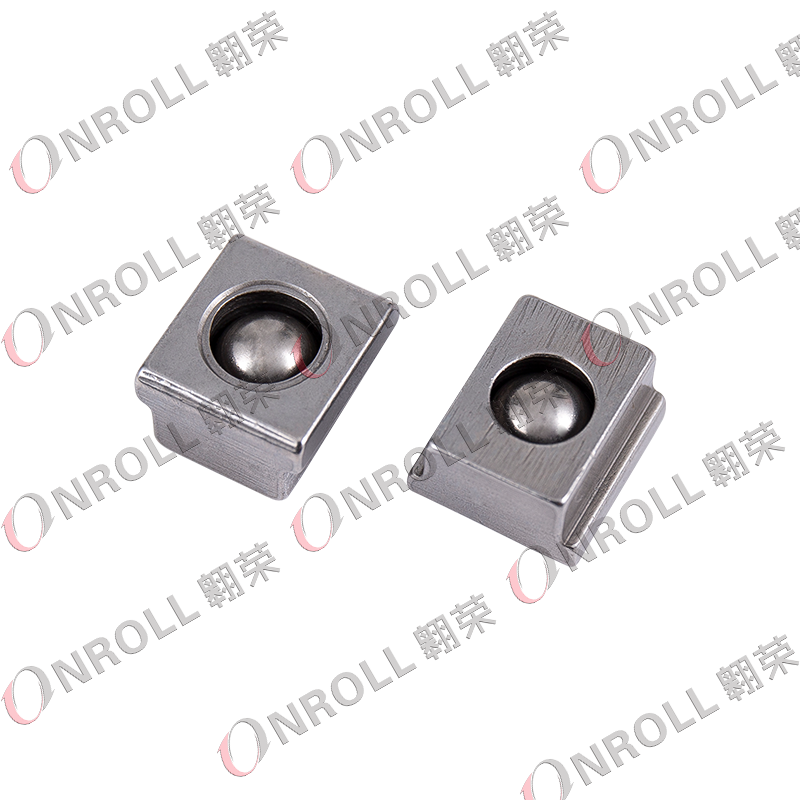 Synchronizer Guide Block Assembly with Integrated Steel BallMade by cold drawing and machining, this guide block pairs with the slider and includes an integrated steel ball to reduce shift resistance. It is suitable for all synchronizer gearboxes and helps restore original clearance.View Product →
80%
of DCT synchronizer failures involve the cone or slider
3x
duty cycle of a manual gearbox synchronizer
60k km
typical early failure point when oil service is skipped
Material grade, hardening depth, and cold-heading precision separate a synchronizer that survives 200,000 km from one that fails at 60,000 km.
DCT synchronizer sliders are produced almost exclusively by cold heading, a process that forms the part at room temperature under high pressure. Cold heading preserves the grain structure of the steel, improving fatigue resistance compared with machined parts, and holds dimensional repeatability at high production volumes.
Three manufacturing details matter more than any others:
Quality control demands automated dimensional measurement and spring testing on every batch. Suppliers like Jiaxing OnRoll Machinery Co., Ltd., whose On-Roll brand has supplied synchronizer components to passenger car programs since 2008, maintain IATF16949:2016 certification because OEM programs require this traceability. A supplier that cannot produce a dimensional report and material certificate per batch has not reached the threshold that DCT production programs require.
Cold heading is not just a cost reduction. It changes the fatigue behavior of the part. A correctly cold-headed slider outlasts a machined slider in cyclic-load testing and holds its geometry within plus or minus 0.03 mm across a full production batch.
A 5th-reverse synchronizer slider is a classic high-volume cold-headed part, produced in large series for passenger car gearboxes where shift quality demands consistent geometry.
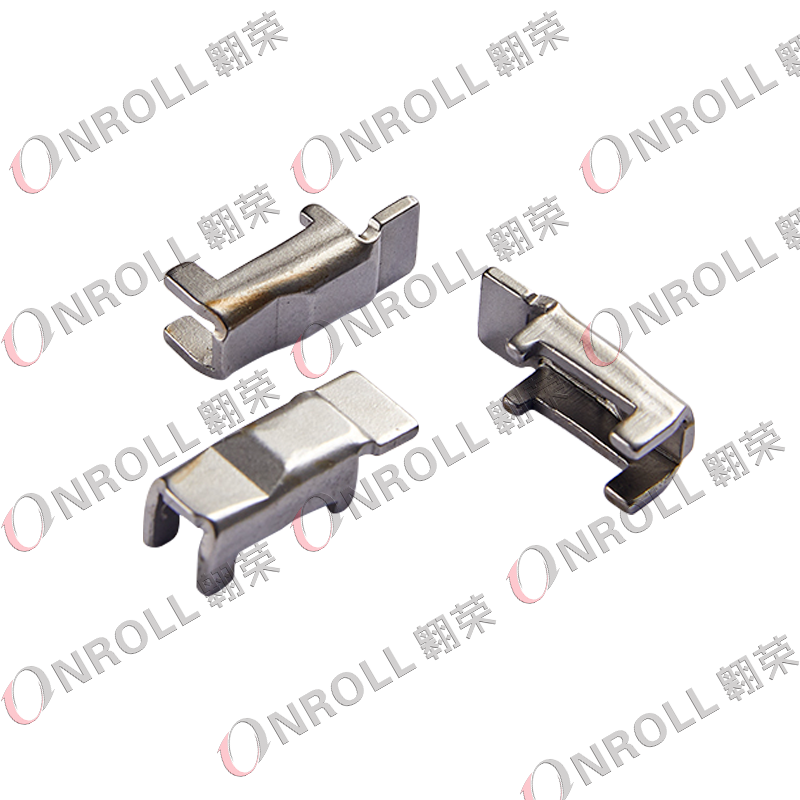 Lightweight 5th Reverse Synchronizer SliderA classic cold-headed high-volume part for passenger car gearboxes, featuring a hollow stamped structure that reduces weight while keeping stable size. It improves shift smoothness and is used in synchronizer assemblies.View Product →
Select DCT gearbox synchronizer parts by matching the OE reference, verifying the material certificate, and checking the dimensional report against OEM tolerances, never by visual similarity alone.
DCT synchronizer assemblies contain several visually similar parts with different tolerances. The slider for the 1-3 gear set may look identical to the slider for the 2-4 set, but its strut width and spring pocket depth are different. Fitting the wrong part causes immediate engagement problems and gear damage within weeks.
For production programs, work with a supplier that can develop nonstandard parts. Transmissions change in small increments, and the aftermarket is full of superseded part numbers that no longer match current production specs. A supplier with in-house engineering, IATF16949 certification, and a proven OEM factory track record can adapt a slider or guide block to your current application instead of forcing you into an obsolete design.
When in doubt, compare the wear pattern on the failed part with service manual photos before ordering. A worn strut with a polished concave face indicates a spring force problem, not a slider defect. Replacing the slider without fixing the spring condition guarantees a repeat failure at the same mileage.
Yes. The clutches manage torque transfer between the engine and the two input shafts, but they cannot equalize the rotational speeds of a gear and its shaft. The synchronizer completes that speed-matching task in the 100-300 millisecond window before dog teeth engage.
A metallic crunch during upshifts, a notchy or delayed engagement after the clutch closes, and an occasional delay between the paddle input and the gear indicator confirmation. These symptoms appear progressively and worsen as the friction cone and slider wear.
Yes. Metal debris from a worn cone or slider is carried by the oil into the valve body, bearings, and gear teeth. In wet DCTs, debris can obstruct hydraulic control valves and trigger pressure-related faults that are not obviously connected to the synchronizer.
With correct oil maintenance and normal driving, a DCT synchronizer lasts between 120,000 and 200,000 km. Neglected oil changes, frequent launch-control use, and contaminated oil can reduce that interval to 60,000 km or less.
Fleet maintenance records consistently show that regular oil changes, OE-correct replacement parts, and verified suppliers extend DCT synchronizer service life by 40 percent or more.
Your email address will not be published. Required fields are marked *

(+86)-191 0581 0729
(+86)-137 5830 1558