


 English
 Español
 中文简体
Product Consultation
Your email address will not be published. Required fields are marked *
Cold Heading Agricultural Machinery Parts: A Foundation for Durability
Aug 06,2025What should you know about synchronizer guide block assembly?
Aug 06,2025Why Bus Gearbox Parts Are Critical for Vehicle Performance?
Aug 06,2025Commercial Vehicle Gearbox Parts: A Comprehensive Guide to Market Trends and Maintenance
Aug 06,2025A DCT synchronizer sleeve can be the reason a dual-clutch transmission shifts from crisp to clunky without a single diagnostic code. The sleeve is the toothed steel collar that locks a gear to its hub, and its wear is measurable: a 0.15 mm loss on the cone chamfer can change shift feel and put the gearbox back on the workbench.
This guide treats the DCT synchronizer sleeve as a measurable component, not a black box. It covers the wear modes that matter, the inspection numbers that catch them, and the supplier checks that prevent a bad batch from reaching your assembly line. The same principles apply whether you are sourcing one replacement sleeve for a repair shop or setting up a supply contract for a transmission remanufacturer.
If you can measure the three wear faces, you can decide between reuse and replacement with confidence instead of guessing from shift symptoms.
The DCT sleeve wears by the same abrasive mechanism as a manual-gearbox sleeve, but the hydraulic actuator removes the human variable, so the wear pattern is more repeatable and easier to catch early.
In a dual-clutch transmission, the sleeve must complete the index and lock sequence in a fixed time window, usually under 250 ms. The shift rail pushes the fork, the fork moves the sleeve, and the sleeve chamfer presses against the blocker ring. Any wear that slows that sequence also increases the difference between the two clutch paths, which is why a worn sleeve on the odd-gear rail can make even-gear shifts feel inconsistent.
In a manual gearbox, the driver can feel the synchronizer and pause at the engagement point. A DCT cannot pause; the hydraulic valve body moves the rail on a fixed profile. That makes the sleeve a timing component, not just a mechanical part.
The shift force travels through the fork groove, the chamfer, and internal splines. Each of those contact pairs has a different wear limit, so a sleeve that looks acceptable from the outside can still be past its service limit on the inside. The numbers below are representative for passenger-car DCT platforms; always verify them against the OEM print.
In many DCT service cases, the sleeve itself is still within print, but the struts, guide blocks, or sliders have worn enough to change the indexing angle. Replacing the slider assembly resets the interface between the hub and the sleeve without modifying the sleeve bore.
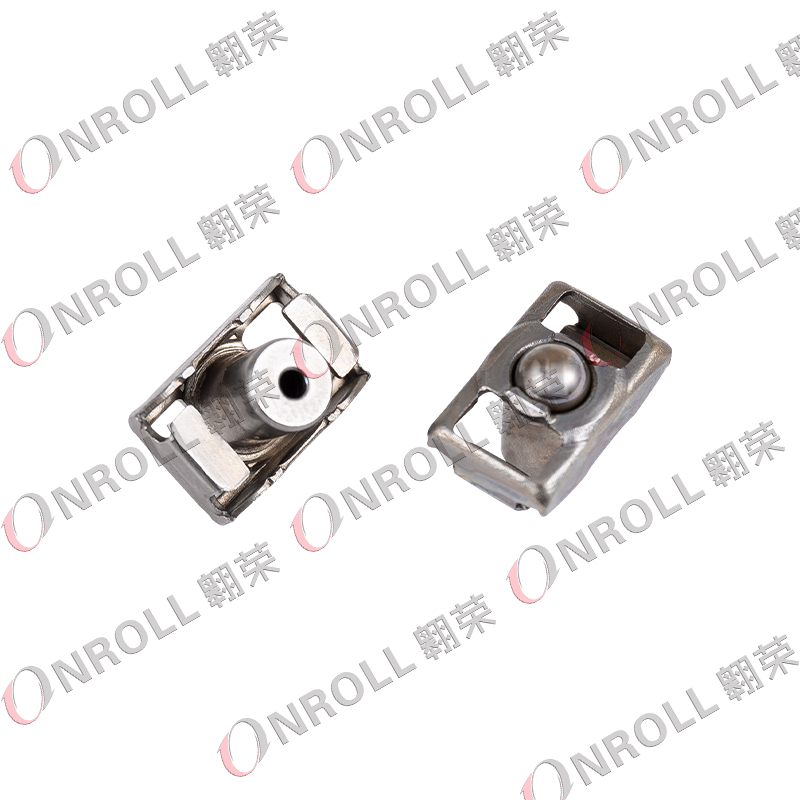 Synchronizer Slider Assembly for DCT and Manual TransmissionsThis slider assembly resets the hub-to-sleeve interface when strut or guide wear changes indexing angle, avoiding sleeve bore modification. It offers stable spring elasticity and easy installation for smoother shifting in passenger cars and light trucks.View Product →
Inspect the cone chamfer, the fork groove, and the internal spline teeth in that order; those three features account for most field-return DCT synchronizer sleeves.
Chamfer collapse is the first failure mode. The chamfer is the angled face that contacts the blocker ring cone. As it wears, the effective contact area grows, which lowers unit pressure but also increases stroke distance and slows the shift. Bench measurements on returned parts show that losing 0.05 mm of chamfer height adds roughly 20 ms to the synchronization phase.
Fork groove widening is the second. The shift fork sits in a groove on the outside of the sleeve. When the groove widens by more than about 0.10 mm, the fork can tilt, and the sleeve will not reach full lock. The groove should be measured with a blade micrometer at the center of the contact band, not at the edge where wear is lighter.
Spline fretting is the third. The internal teeth slide on the hub splines thousands of times. Fretting between the two hardened surfaces creates fine metallic debris that contaminates the oil and can later damage shift solenoids. A dial bore gauge with a 0.01 mm resolution is enough to separate normal surface polishing from measurable fretting.
On a bench, a new sleeve should show no visible grooving on the chamfer face. Polishing marks are normal, but a visible step means the case has started to break down.
| Checkpoint | Typical new value | Replace if |
| Cone chamfer height | 1.20 mm | below 1.05 mm |
| Shift fork groove width | 3.05 mm | above 3.15 mm |
| Hub spline backlash | 0.03 mm | above 0.10 mm |
| Case surface hardness | 58 HRC min | below 55 HRC |
When the guide block lug wears, the sleeve can rotate slightly before the chamfer makes contact. The symptom is identical to a worn sleeve, but the fix is a guide block, not the more expensive sleeve.
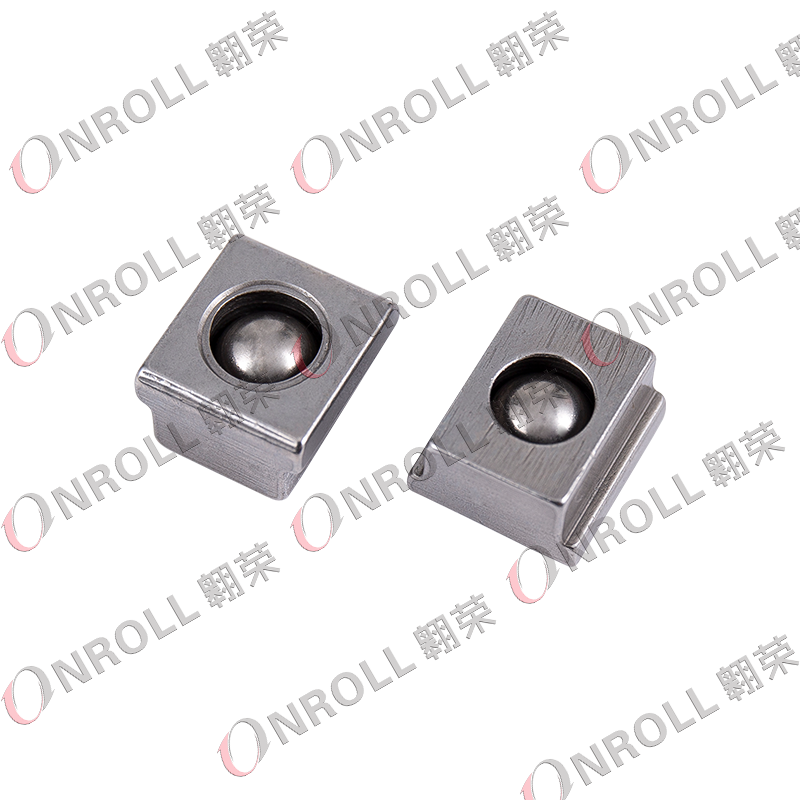 Synchronizer Guide Block Assembly with Integrated Steel BallWorn guide block lugs mimic sleeve wear but cost less to replace. This cold-drawn, machined assembly includes an integrated steel ball to reduce shift resistance, making it a practical fix for DCT shifting issues without replacing the sleeve.View Product →
Case depth and retained austenite control determine sleeve life, not the commercial name of the steel. A low-alloy steel with the correct hardened case will outlast a higher-alloy steel with an uneven case.
For passenger-car DCT applications, a carbonitrided case in the 0.30-0.60 mm range with a surface hardness of 58-62 HRC is a common specification. The same material without the nitrogen-bearing layer can show adhesive wear on the chamfer after high-speed downshifts. Retained austenite above 20 percent can yield under impact, while below 8 percent the case becomes brittle and prone to edge chipping.
Carbonitriding also improves scuffing resistance when the oil film collapses; this is why many DCT sleeves have a dark gray surface rather than a bright machined finish.
The ranking is a normalized comparison for evaluating replacement sleeves, not a substitute for the OEM print. The more important supplier signal is whether the case-depth band and hardness are checked on every batch.
Start with the dimensional print, then verify the case-hardening certificate; a sleeve that is 0.02 mm over the bore tolerance can pass a go/no-go gauge and still bind during a hot shift.
Jiaxing OnRoll Machinery Co., Ltd. (OnRoll) supplies synchronizer sliders, guide blocks, stop blocks, and DCT brackets for original-equipment and aftermarket transmission programs. OnRoll operates an OEM factory under IATF 16949 certification, with automatic dimensional and elasticity checking on synchronizer parts.
For high-volume buyers, the unit price of a sleeve is small compared with the labor cost of a repeat repair. A 0.5 percent incoming reject rate is acceptable only if the failed part is caught before assembly; field failures are much more expensive.
For a new DCT synchronizer sleeve supplier, the most revealing document is the first-article inspection report. Look for chamfer angle readings at three positions separated by 120 degrees. If the angle varies by more than 0.2 degrees around the circumference, the sleeve will load the blocker ring unevenly and wear will accelerate on the high side.
The same qualification process applies to the parts around the sleeve. A DCT bracket with a loose weld causes the actuator rail to sit at an angle, which accelerates fork groove wear on the sleeve.
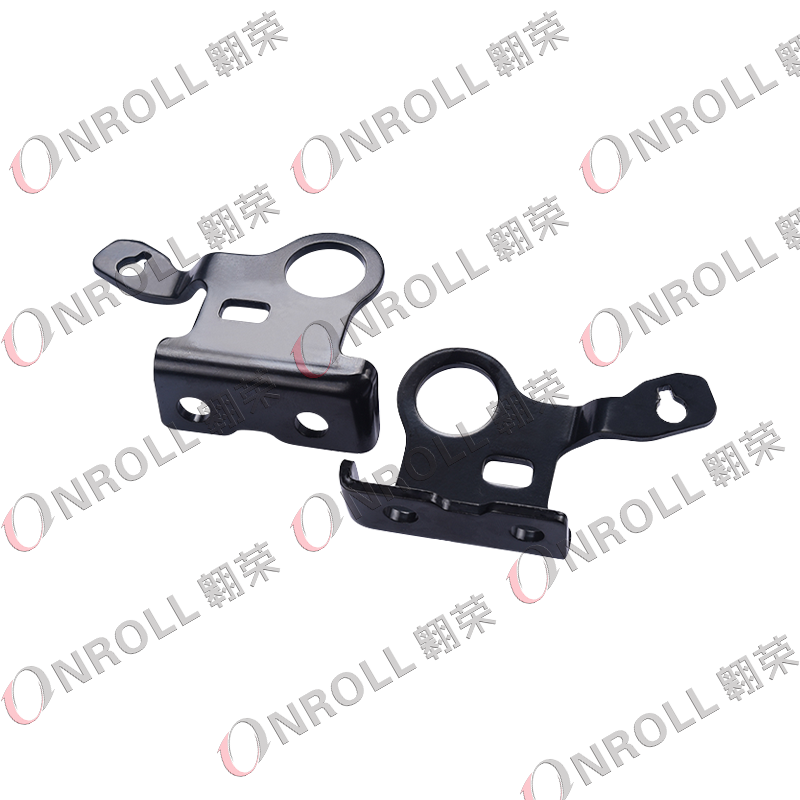 DCT Bracket for Actuator Rail AlignmentA loose weld on this bracket tilts the actuator rail, accelerating sleeve fork groove wear. As an OEM/ODM part, it supports precise rail mounting to maintain proper alignment and prolong synchronizer life in dual-clutch transmissions.View Product →
Do not schedule a DCT sleeve replacement by mileage alone; measure the three contact features and replace only when the print tolerance is exceeded.
In passenger-car service, a sleeve that loses less than 0.05 mm of chamfer height usually stays in service. Above the 0.15 mm threshold, the shift time increases enough to affect the next clutch engagement, and the mechanical click becomes audible. The same threshold explains why two identical transmissions can fail at very different mileages: one runs on low-viscosity oil and short-trip cold starts, the other on routine highway duty.
If the oil smells burnt or contains gray sludge, replace the fluid and filter separately; a sleeve wear event often produces fine gray particles that are too small to see but measurable in an oil analysis.
Listen for a single mechanical click when the transmission shifts from neutral to first or reverse.
Mount a dial indicator on the shift rail and measure axial free play before removing the actuator.
Replace the sleeve if the chamfer height is below the print minimum; otherwise clean and regrease the hub splines.
Only if the chamfer height, fork groove width, and spline backlash all remain inside the OEM print after cleaning. If metallic debris has circulated through the oil, replace the sleeve and the hub together.
The hub is the stationary part splined to the shaft, and the sleeve is the moving collar that slides over the hub to lock a gear. The sleeve carries fork loads, while the hub supports the gear-bearing load.
A well-designed passenger-car DCT sleeve typically lasts the design life of the transmission when the oil-change interval is respected and no shift-fork overtravel occurs.
Most modern DCTs use one sleeve per gear pair or small group, which is why a single failed sleeve can disable either the odd or even gear path.
Your email address will not be published. Required fields are marked *

(+86)-191 0581 0729
(+86)-137 5830 1558