


 English
  Español
  中文简体
中文简体
Product Consultation
Your email address will not be published. Required fields are marked *
Cold Heading Agricultural Machinery Parts: A Foundation for Durability
Aug 06,2025What should you know about synchronizer guide block assembly?
Aug 06,2025Why Bus Gearbox Parts Are Critical for Vehicle Performance?
Aug 06,2025Commercial Vehicle Gearbox Parts: A Comprehensive Guide to Market Trends and Maintenance
Aug 06,2025A dual-clutch transmission completes an upshift in roughly 30 milliseconds, but the driver feels a good shift only when the DCT synchronizer has done its job first. Before the sleeve locks onto the target gear, the synchronizer must cancel the speed difference between gear and shaft, absorb the inertia of the clutch and gearset, and deliver a clean engagement. Get that sequence right and the shift is imperceptible. Get it wrong and the gearbox grinds, whines, or develops a delayed engagement that makes stop-and-go traffic miserable.
Internal synchronizing parts are harder to source than complete gearboxes, so buyers weigh price, lead time, and technical evidence. Material grade, dimensional control, and production history separate a dependable DCT synchronizer from a stopgap. This guide covers the function, the wear points, and the supplier checks that matter.
A DCT synchronizer is the friction-and-locking device that matches the rotational speed of a transmission gear to its shaft before the dog clutch engages.
Gears in a DCT sit in constant mesh, each spinning freely on its shaft until a synchronizer hub locks it. The two clutches manage the engine side, but every gear pair still needs speed equalization before it can carry load, in three steps:
Those steps repeat tens of thousands of times. In a 7-speed wet DCT in city delivery service, cumulative shifts pass 100,000 before a major overhaul, with the synchronizer absorbing a different energy load on every shift.
Two clutches replace the driver's foot; they do not replace the synchronizer.
The phrase "dual clutch" misleads some buyers into thinking the synchronizer is optional. Each gear pair on the two input shafts still needs its own locking mechanism, and without a synchronizer the dog teeth would engage a gear spinning hundreds or thousands of revolutions per minute faster than its shaft. The result is tooth hammering, missed shifts, and rapid hub wear.
DCT synchronizers also have to overcome oil drag inside a wet clutch housing. The residual torque of the still-rotating clutch pack adds a load the cone must manage on every shift, pushing the component well beyond the duty of synchronizer strut parts in manual gearboxes.
Every DCT synchronizer assembly contains the same functional family: slider, guide block, stop element, and blocking ring or cone. Failure rarely appears all at once; it shows up as measurable wear in one of these parts first.
| Component | Role | First signs of wear |
| Slider or strut | Transmits fork force to the blocker ring | Step wear, edge rounding, loose fit in hub slot |
| Guide block | Locates the slider and centers the assembly | Side-face scoring, dimensional oversize |
| Stop block | Limits ring travel, defines shift feel | Impact pitting, cracked edges |
| Detent pin and spring | Hold the slider in neutral and engaged positions | Spring fatigue, pin end mushrooming |
| Blocking ring or cone | Generates friction torque for speed matching | Glazing, worn cone grooves |
The slider and guide block are the highest-wear steel parts in a DCT synchronizer. Cold-headed sliders with controlled grain flow survive high cycle counts better than machined blanks because the fibre orientation follows the part contour instead of being cut across it.
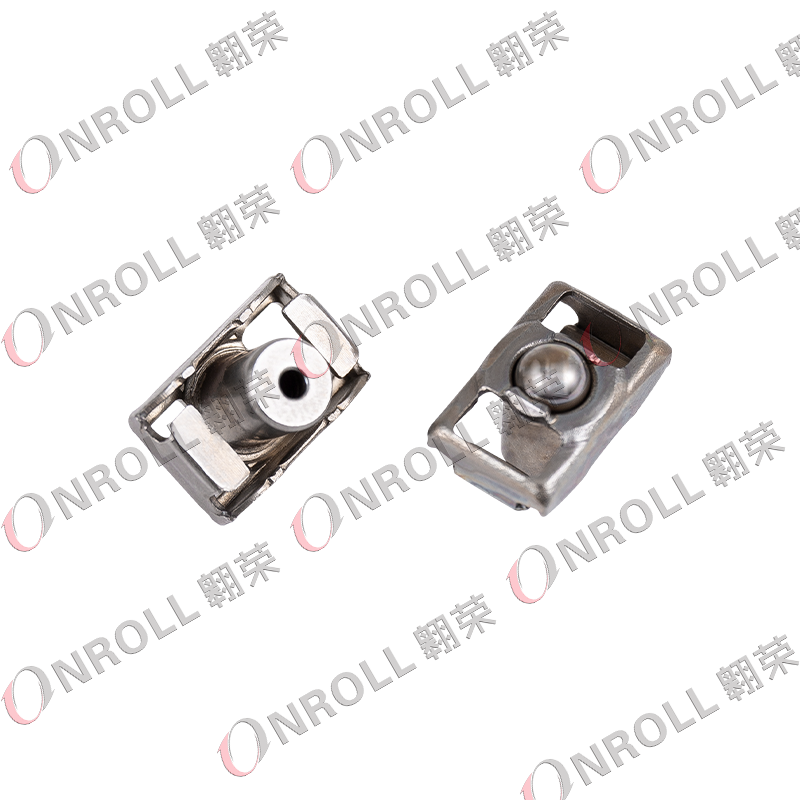 Precision Synchronizer Slider Assembly with Stable Spring ElasticityThis stamped slider assembly offers stable size and spring performance, supporting smooth gear shifts in manual and automatic transmissions. Its lightweight, high-strength design suits passenger cars and light trucks.View Product →
Guide block assemblies demand tight width control. A block 10 microns oversize slows cold shifts by increasing hub slot friction; 10 microns undersize invites a rattle at idle. The right window is fixed empirically during sample approval.
DCT synchronizers work harder than manual parts in three ways: higher shift frequency, wider oil temperature range, and higher cumulative energy absorption per kilometre.
Driver-paced shifting at one to two shifts per kilometre in mixed traffic. Engagement speed is set by hand and clutch foot, and the synchronizer cools down between shifts while operating in a narrow energy envelope.
Algorithm-paced shifting at three to five shifts per kilometre, with intervals as short as 12 seconds in sport mode. The part cycles continuously at higher oil temperature, with no driver feedback to soften engagement.
The practical result is roughly triple the cumulative energy input for the same vehicle mileage, which is why DCT synchronizer parts use higher hardenability steels and tighter heat-treatment control than older manual gearbox products.
Material grade and forming process decide whether a synchronizer part survives 100,000 city shifts or fails at 20,000.
Three forming routes dominate: cold heading, powder metallurgy, and CNC machining. Cold heading wins when volume justifies tooling and the part allows grain-flow alignment. Powder metal suits complex multi-level geometry at a slightly lower mechanical rating. CNC machining is for prototypes and short series.
Cold heading produces sliders with a continuous grain structure that resists the edge loading typical of DCT shifts, which is why it remains the preferred route for high-volume synchronizer parts. A typical 7-speed wet DCT shifts near 6,000 rpm, and a synchronizer must cancel the speed differences shown below on every upshift:
Speed difference handled per upshift - 7-speed wet DCT, 6,000 rpm shift point
A guide block with the correct width tolerance and surface finish keeps shift force consistent from cold start to full operating temperature. That consistency separates a ground, measured part from one that is only stamped and deburred.
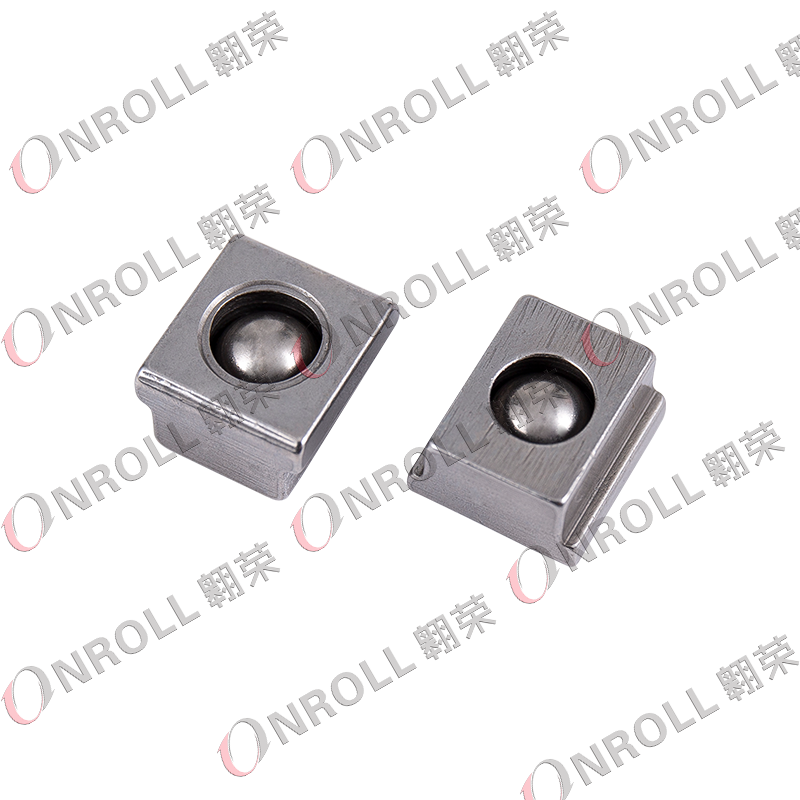 Synchronizer Guide Block Assembly with Integrated Steel BallFeaturing an integrated steel ball, this guide block reduces shift resistance for smoother gear changes. Cold drawing and machining preserve steel strength while easing assembly in all synchronizer-equipped gearboxes.View Product →
Choosing a DCT synchronizer supplier comes down to four checks that separate a production-capable factory from a trading intermediary.
The same supplier can consolidate related DCT hardware such as brackets and detent pins, shortening the supply base and reducing inbound freight. A DCT bracket is lower-tolerance than a slider, but it still protects harness routing and oil line positions, so dimensional accuracy matters.
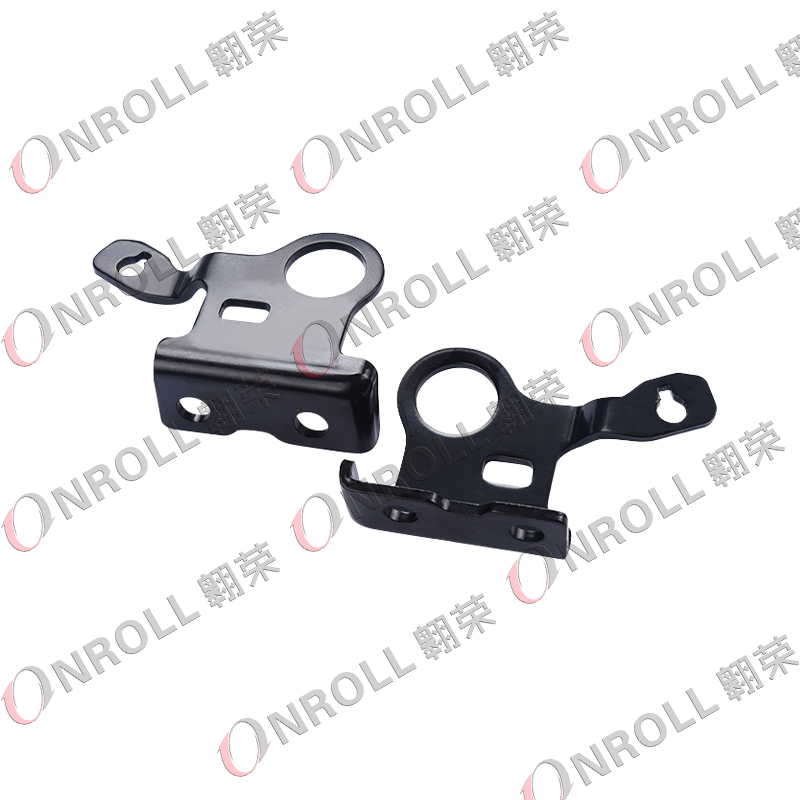 OEM DCT Bracket for Transmission Hardware ConsolidationA reliable DCT bracket from an IATF 16949-certified manufacturer, offering dimensional accuracy for harness and oil line protection. Ideal for customers seeking to consolidate related transmission components.View Product →
Jiaxing OnRoll Machinery Co., Ltd. (On-Roll) fits this profile: 4,000 square metres of manufacturing floor in Jiaxing, IATF 16949-certified processes, automated dimension and spring testing, and synchronizer slider production history stretching back to 1992. On-Roll entered the OEM supply chain for Chinese gearbox programmes in 2008 and offers contract manufacturing through its OEM factory line.
Yes. Each gear pair in a DCT has its own synchronizer assembly. The two clutches manage engine-to-gearbox torque, but the synchronizers equalize speed between each gear and its shaft before the dog clutch locks them together.
The working principle is the same, but DCT synchronizers shift more often, absorb more cumulative energy, and run without driver modulation of engagement force. They are therefore specified with harder materials, tighter tolerances, and more robust sliders and guide blocks.
In a maintained 7-speed DCT, a synchronizer assembly typically outlasts the wet clutch set, with service life in the 100,000 to 200,000 kilometre range in mixed driving. Heavy city use, low oil level, and aggressive launch control reduce that figure sharply.
A muffled grind during rapid upshifts, delayed engagement into first or reverse, and a metallic rattle at idle are the common signs. Any of these should trigger inspection before secondary damage reaches the gear dog teeth.
Your email address will not be published. Required fields are marked *

(+86)-191 0581 0729
(+86)-137 5830 1558