


 English
  Español
  中文简体
中文简体
Product Consultation
Your email address will not be published. Required fields are marked *
Cold Heading Agricultural Machinery Parts: A Foundation for Durability
Aug 06,2025What should you know about synchronizer guide block assembly?
Aug 06,2025Why Bus Gearbox Parts Are Critical for Vehicle Performance?
Aug 06,2025Commercial Vehicle Gearbox Parts: A Comprehensive Guide to Market Trends and Maintenance
Aug 06,2025When a six-speed manual gearbox starts grinding on the 2nd-3rd upshift and metal particles show up in the oil analysis, the root cause is usually not the gear set. It is the small components inside the shift mechanism - synchronizer sliders, guide blocks, detent pins, and push blocks - that absorb the shifting load, wear first, and force a full transmission teardown. For procurement engineers and gearbox manufacturers, understanding how these transmission shift components behave at the material, tolerance, and process level is the difference between a 300,000 km service life and a warranty claim at 20,000 km.
Transmission shift components are the precision parts that convert gear lever motion into gear engagement and hold that engagement once selected. They fail primarily through wear and fatigue, because every shift cycle loads them with high impact force inside gearbox oil that can exceed 100 degrees Celsius.
The parts separate into four functional groups:
| Component | Core function | Dominant failure mode | Typical material |
| Synchronizer slider | Axially pushes synchro ring onto gear cone | Wear at fork contact face | Case-hardened steel |
| Guide block | Radial positioning and torque transfer | Edge wear and pitting | Carbon steel or sintered |
| Detent pin | Detent feel and gear holding | Fatigue and end wear | Spring steel or stainless |
| Push block | Rail-to-fork force transfer | Impact deformation | Hardened steel |
| Interlock plate | Prevents dual-gear engagement | Surface galling | Carbon steel |
Cold heading produces transmission shift components with continuous grain flow and a clearly lower per-piece cost than machining, which is why volume-produced sliders, pins, and push blocks are cold-forged instead of cut from bar stock. The grain lines follow the part contour rather than being sliced across, so fatigue strength under the repeated axial loads of each shift improves measurably.
Machining still makes sense for complex undercuts, very small batches, and prototype runs. After a design stabilizes and volume passes roughly 50,000 pieces per year, cold heading typically cuts cost by 25-30 percent and delivers tighter dimensional consistency across batches. The offset is higher tooling investment and a longer development phase, so design-for-cold-heading decisions must be made before the drawing is released.
Jiaxing OnRoll Machinery Co., Ltd., a Zhejiang-based manufacturer with the On-Roll brand and an IATF 16949-certified 4,000-square-meter plant, produces a large share of its gearbox components by cold heading, including synchronizer sliders, detent pins, and push blocks, and also supplies cold-headed non-standard parts for bus and agricultural transmissions.
A transmission shift component can look flawless and still fail early if critical dimensions drift from the design intent. The three checks with the highest payback are fork-contact profile radius, flatness across the sliding face, and hardness consistency inside the same batch.
Automated inspection is not optional for safety-related parts. OnRoll runs automatic dimensional and elasticity testing equipment that checks every piece on critical characteristics, including the spring rate of detent pins and the profile radius of slider contact faces. This coverage keeps a 100,000-piece production batch inside the same statistical distribution as the approved samples.
| Parameter | Typical requirement | Inspection method | Deviation consequence |
| Fork contact profile radius | +/-0.05 mm | Optical profile projector | Notchy shift, higher contact stress |
| Slider flatness | 0.03 mm max | Surface plate and dial indicator | Uneven wear, premature failure |
| Case hardness | 58-62 HRC | Rockwell with Cpk report | Fast wear or brittle fracture |
| Detent pin spring rate | +/-5% of specification | Automated elasticity test | False neutral, poor shift feel |
| Outside diameter concentricity | 0.05 mm max | Gauge R&R study | Vibration and noise |
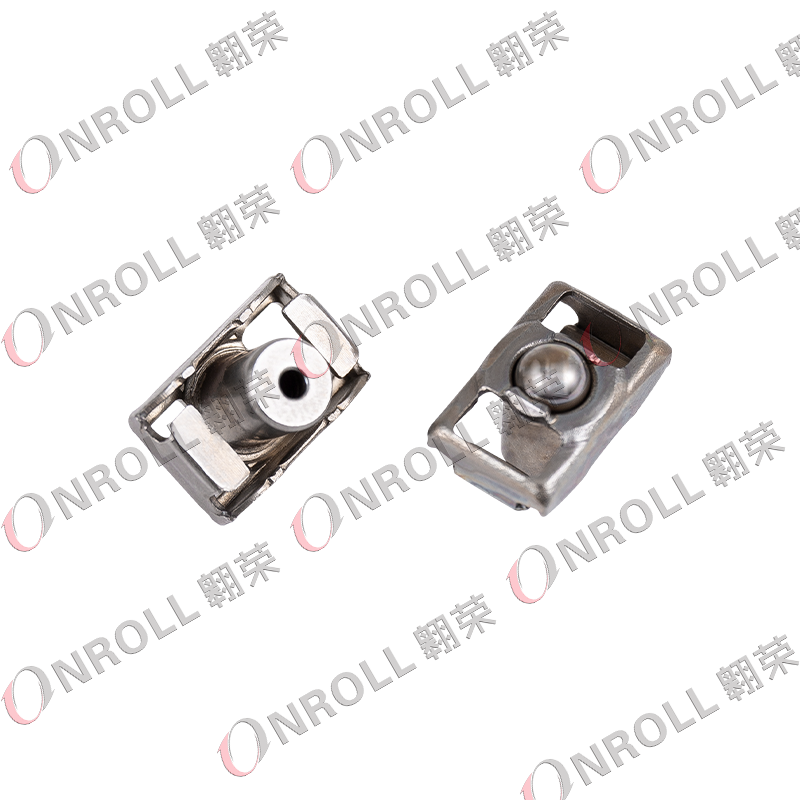 Stamped Synchronizer Slider Assembly with Stable DimensionsThis integral slider is stamped with a step-in die for stable size and spring elasticity, improving shift smoothness in passenger cars, light trucks, and manual or automatic transmissions. It is lightweight, high-strength, and designed for easy installation.View Product →
The synchronizer slider and the guide block sit only millimeters apart inside the hub, but their wear mechanisms are different enough that one material choice cannot serve both parts optimally. The slider wears by sliding friction against the shift fork; the guide block wears by impact and edge loading during cone contact.
Moves axially in the hub slot and pushes the synchro ring onto the gear friction cone. The contact face must combine high surface hardness with a controlled running-in allowance, and the fork groove profile must match the shift fork radius exactly.
Provides radial constraint and carries torque from the hub to the sleeve during synchronization. It takes repeated impact loads, so edge radius, bevel angle, and material toughness matter more than raw hardness.
The practical takeaway is to request separate durability validation for each part. A single synchronizer package test that only measures shift force will not expose guide block edge fatigue. OnRoll covers both families under one roof: the passenger-car range includes synchronizer strut and slider components plus guide block assemblies, all produced on dedicated cold-heading and finishing lines.
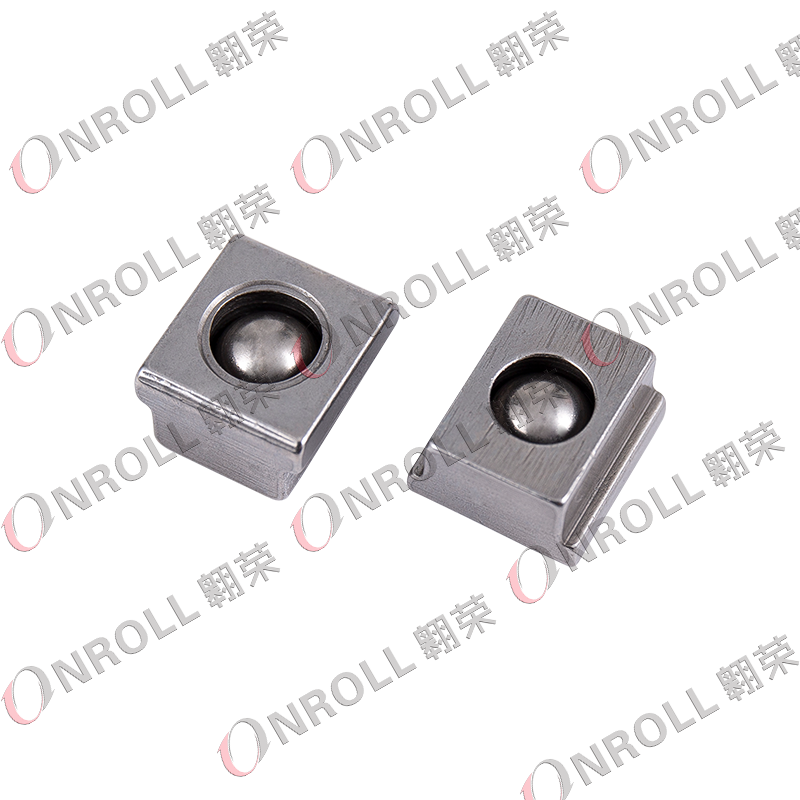 Cold-Drawn Synchronizer Guide Block with Integrated Steel BallThis guide block uses cold drawing and machining to preserve steel strength while integrating a steel ball that reduces shift resistance. It suits all synchronizer-equipped gearboxes and supports smoother gear changes.View Product →
The fastest way to de-risk a transmission shift component order is to audit four things: material traceability, process capability data, 100 percent inspection coverage on safety-related dimensions, and a pilot batch produced on the same line planned for mass production. These four checks separate a capable supplier from one that merely passes a first-article inspection.
Suppliers that handle both catalog parts and custom development reduce your total sourcing workload. OnRoll operates an OEM factory that accepts customer drawings and samples for non-standard shift components, including stainless steel detent pins, plastic sliders, and cold-headed parts for commercial vehicle gearboxes.
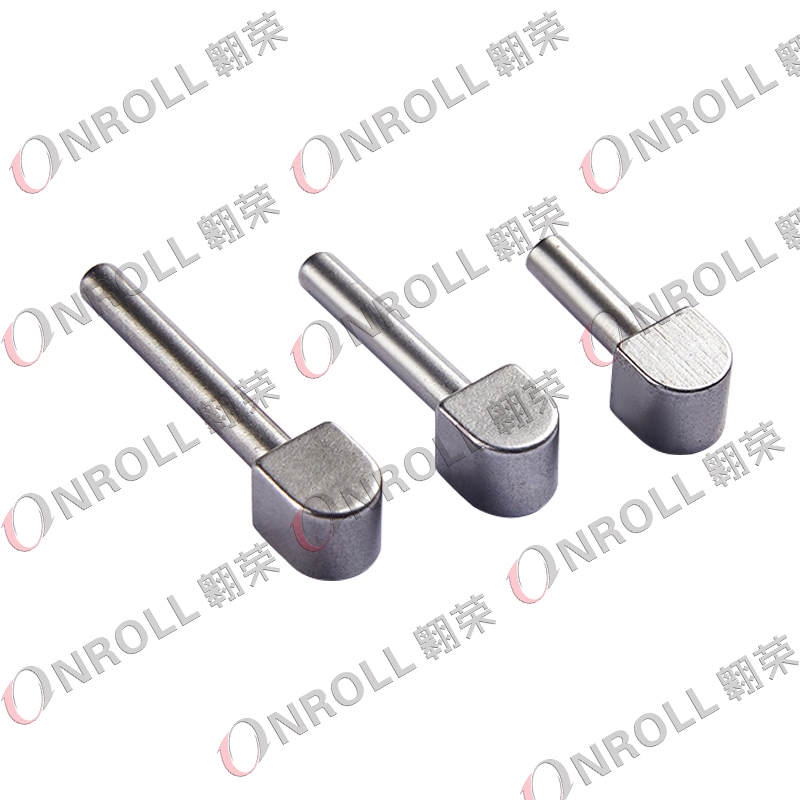 Cold-Headed Synchronizer Push Block for Commercial VehiclesThis push block is produced via cold heading and machining for lower cost and high efficiency while retaining mechanical strength. It handles large loads and torques in commercial vehicle gearboxes and secondary transmissions.View Product →
For most manual gearbox designs the two terms describe the same part: a long, thin block that sits in a machined slot of the synchronizer hub and pushes the synchro ring toward the gear cone. Some OEM drawings call it a strut, others call it a slider. OnRoll catalogs it as a synchronizer slider for passenger and commercial gearboxes.
Synchronizer sliders in normal passenger-car service typically last 150,000 to 250,000 km. Hard shifting, towing, and aggressive clutch use shorten that window to below 100,000 km. Fleet maintenance records show that once shift effort increases by about 30 percent, wear accelerates sharply and the component should be replaced without delay.
Yes, for specific low-load functions. Detent guides, thrust washers, and some slider elements in low-torque gearboxes use engineering plastics such as PA66 or POM to reduce weight, noise, and cost. Load-carrying synchronizer sliders in passenger and commercial gearboxes remain steel because contact stress exceeds the yield limit of any polymer.
The minimum is IATF 16949 quality management certification and a documented PPAP/PSW submission process. For safety-related shift components, the supplier should also demonstrate automatic 100 percent dimensional and elasticity inspection on critical characteristics, plus a defined containment procedure for out-of-spec batches.
Your email address will not be published. Required fields are marked *

(+86)-191 0581 0729
(+86)-137 5830 1558