


 English
  Español
  中文简体
中文简体
Product Consultation
Your email address will not be published. Required fields are marked *
Cold Heading Agricultural Machinery Parts: A Foundation for Durability
Aug 06,2025What should you know about synchronizer guide block assembly?
Aug 06,2025Why Bus Gearbox Parts Are Critical for Vehicle Performance?
Aug 06,2025Commercial Vehicle Gearbox Parts: A Comprehensive Guide to Market Trends and Maintenance
Aug 06,2025A medium-duty truck reaches the workshop with a grinding 3-4 shift and a gear lever that no longer centers itself. Strip-down reveals worn synchronizer sliders and a fatigued detent spring: two small automotive gearbox components, each under 50 grams, that decide whether a transmission shifts cleanly past 200,000 kilometers or fails before 60,000. For procurement teams and maintenance engineers alike, knowing how these parts work, wear, and are manufactured separates a durable driveline from a recurring warranty claim.
This guide maps the functional groups inside a gearbox, explains how synchronizer and detent components behave under load, compares the manufacturing routes behind them, and sets out evidence-based criteria for choosing a component supplier.
Every automotive gearbox - manual, automated manual, or dual-clutch - is built from the same six functional groups: shafts, gears, synchronizers, detent and locking mechanisms, bearings, and seals. Power enters through the input shaft, is re-routed through gear pairs to change ratio, and leaves through the output shaft. Synchronizers match shaft and gear speeds before engagement, while detent and interlock devices hold the selected ratio and stop a second gear from being chosen at the same time.
Split any failed transmission and the hierarchy is visible: gear pairs ride on the main and countershafts, synchronizer hubs are splined onto the output shaft, detent springs press pins into notches on the shift rails, interlock plates sit between rails, and every rotating element is supported by bearings and protected by seals. Each group has its own wear signature, and most premature failures start in one component group before spreading to the others.
| Component group | Primary function | Common failure | Consequence |
| Input and output shafts | Transfer engine torque to the drivetrain | Bearing journal wear, spline fretting | Driveline noise and power loss |
| Gear pairs | Provide speed and torque ratios | Tooth pitting, root fracture | Whine, sudden seizure |
| Synchronizer assembly | Equalise speed before engagement | Slider and ring glazing wear | Grinding, hard shifting |
| Detent pin and spring | Hold shift rail in selected position | Spring fatigue, pin-end wear | Gear jump-out, vague lever feel |
| Interlock plate | Block simultaneous gear engagement | Edge deformation, wear | Double-engagement risk |
| Bearings and seals | Support loads and retain lubricant | Spalling, lip leakage | Vibration, oil loss |
The synchronizer assembly is the most wear-sensitive group of automotive gearbox components because it converts the kinetic energy of a spinning gear into heat, metal-to-metal, in less than half a second on every shift. Inside the hub, three synchronizer sliders (also called struts) sit in slots spaced 120 degrees apart, pushed outward by small springs against a blocking ring. When the shift fork moves, it presses the sliders forward; the sliders push the blocking ring against the gear cone, friction torque synchronises the speed, and the sliders then drive spline teeth into engagement to lock the ratio.
Wear appears first as a rounded contact face on the slider foot and as glazing on the cone of the blocking ring, followed by hard shifting, grinding, and eventually gear jump-out. Because the slider is case-hardened to 58-62 HRC, a replacement must be matched to the original material specification: softer steel feels correct for a few thousand kilometers and then accelerates ring wear.
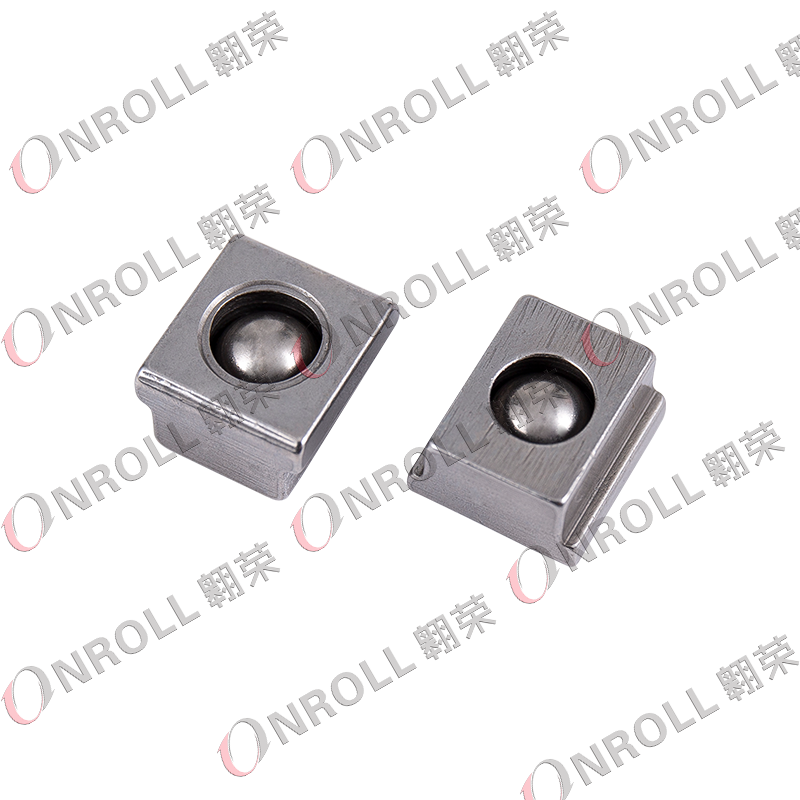 Cold-Drawn Synchronizer Guide Block with Integrated Steel BallThis guide block combines cold drawing and machining to preserve steel strength while simplifying assembly. Its integrated steel ball reduces shift resistance, making it a practical replacement when worn sliders cause hard shifting or gear jump-out.View Product →
Shift quality is decided as much by detent and locking components as by synchronizers: these small parts hold the selected gear, prevent two gears from engaging together, and report neutral position to the engine control unit. A detent pin rides in a notch on the shift rail, pressed by a spring with a defined force that produces the characteristic notch feel at the lever. When spring tension drops or the pin end wears, the rail creeps out of engagement - the classic jump-out-of-gear complaint on worn commercial transmissions.
Interlock plates or balls sit between shift rails and block a second rail from moving while one ratio is selected. Bus and truck gearboxes additionally use neutral-position switch driving blocks that actuate a sensor for starter interlock and transmission logic. A missing, worn, or wrongly dimensioned block makes the gearbox report neutral incorrectly, which can stop the vehicle from starting or cause an unintended automatic shift.
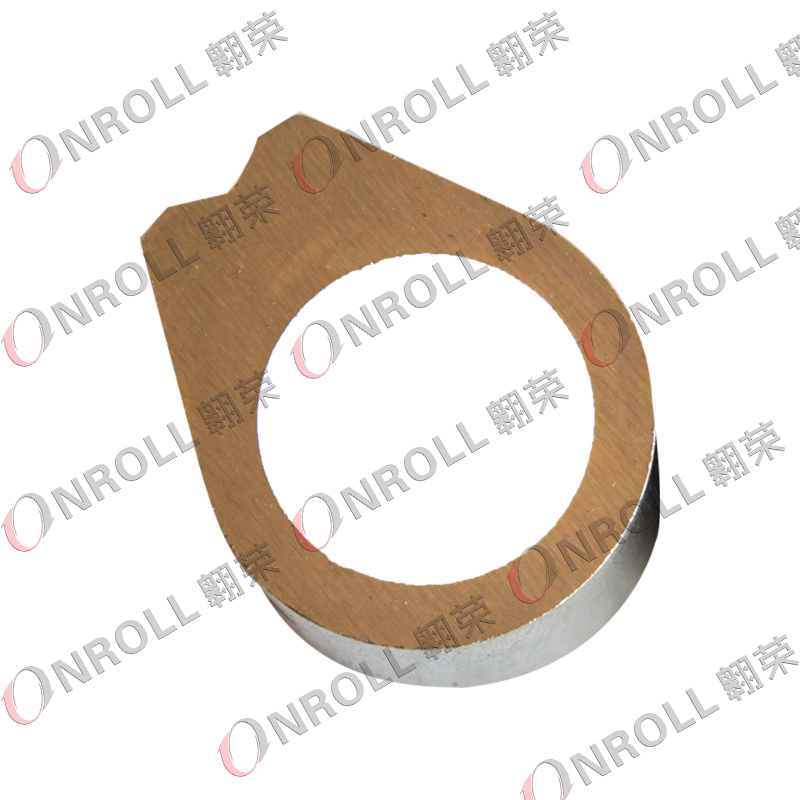 Neutral Position Switch Driving Block for Transmission LogicThis block actuates the neutral sensor that feeds starter interlock and transmission logic. A correctly dimensioned replacement is essential for accurate neutral reporting, preventing starting issues or unintended automatic shifts in bus and truck gearboxes.View Product →
Cold heading is the dominant process for high-volume gearbox components such as sliders, detent pins, and push blocks because it combines better than 90 percent material utilisation with a grain flow that follows the part contour. Coiled wire is cut and upset at room temperature into near-net shape in a sequence of dies, then finished by trimming, thread rolling, and heat treatment. Because material flows rather than being cut away, fatigue strength in loaded fillets is higher than for identical parts machined from bar stock. CNC machining stays the right choice for large, complex, or low-volume parts where die cost cannot be justified.
Qualifying an automotive gearbox components manufacturer requires documented process evidence - a valid IATF 16949 certificate, capability indices on critical dimensions, and material traceability - not a promising first article. The most common sourcing mistake is judging a supplier on an approved sample: sample approval proves that a setup worked once, but says nothing about stability. A capable plant releases control plans with a Cpk of 1.33 or higher on every critical characteristic and ships synchronizer and detent components at single-digit PPM.
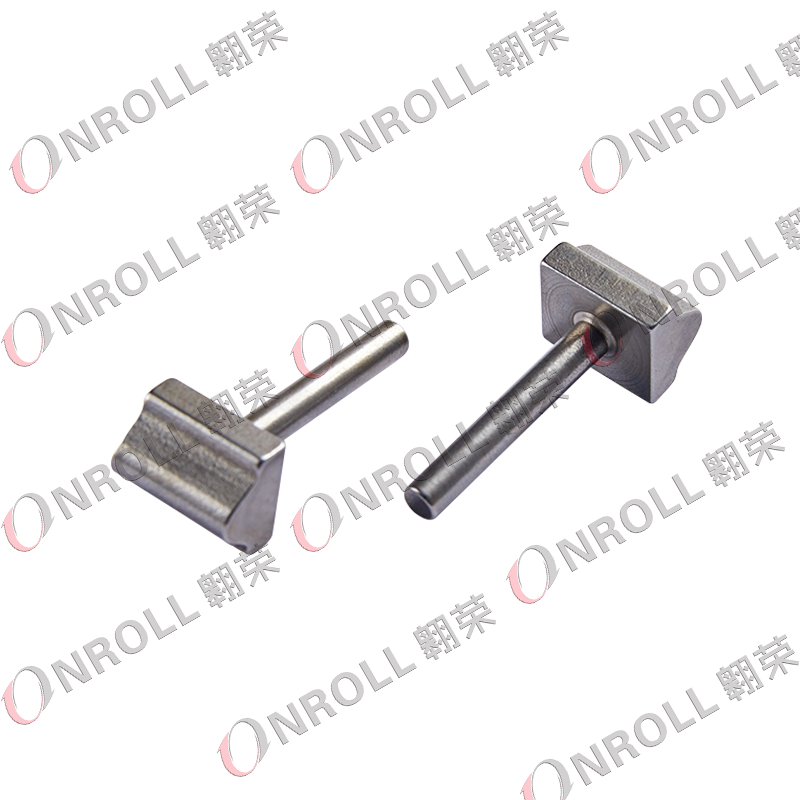 Cold-Headed Push Block for Commercial Vehicle GearboxesMade by cold heading plus machining, this push block retains mechanical strength while lowering cost compared with fully machined parts. It suits heavy-load commercial transmissions, where durable sliders and rings are critical for long service life.View Product →
With clean oil and normal driving, synchronizer components in a manual gearbox typically last between 150,000 and 300,000 kilometers. Heavy towing, missed shifts, and low oil levels can cut that below 60,000 kilometers. The slider and blocking ring are usually the first parts to wear.
Detent failures come from three causes: spring fatigue after millions of load cycles, wear on the pin end caused by contaminated oil, and over-travel from misadjusted shift cables. The usual result is a vague lever feel or a gear that jumps out under load.
Yes. Guide blocks and low-load sliders are increasingly made of PA66-based compounds in passenger-car and automated manual applications. Plastic parts reduce friction and weight, but they cannot handle the thermal and impact loads of heavy commercial duty, where case-hardened steel remains the standard.
IATF 16949 is the entry ticket for automotive supply. ISO 14001 and ISO 45001 cover environmental and occupational health management. Beyond certificates, request PPAP level 3 documentation, Cpk data, and a material certificate for every batch you buy.
Your email address will not be published. Required fields are marked *

(+86)-191 0581 0729
(+86)-137 5830 1558