


 English
  Español
  中文简体
中文简体
Product Consultation
Your email address will not be published. Required fields are marked *
Cold Heading Agricultural Machinery Parts: A Foundation for Durability
Aug 06,2025What should you know about synchronizer guide block assembly?
Aug 06,2025Why Bus Gearbox Parts Are Critical for Vehicle Performance?
Aug 06,2025Commercial Vehicle Gearbox Parts: A Comprehensive Guide to Market Trends and Maintenance
Aug 06,2025In the modern automotive industry, the engine is the core of overall vehicle performance, and engine components are the fundamental building blocks of this complex system. With technological advancements, engine component manufacturing has entered a highly precise stage. From traditional casting and forging processes to today's advanced CNC machining technology, every technological innovation has driven the progress of the automotive industry.
As the core of a vehicle's powertrain, the engine directly impacts the vehicle's power performance, fuel efficiency, and emission standards. The quality of engine components directly determines the engine's efficiency and reliability. From cylinder heads and pistons to valves, each component performs a vital function. For example, pistons compress and transmit power in the engine, while valves control the intake and exhaust of gases, maintaining the engine's normal operation. A problem with any small component can lead to a decline in overall vehicle performance or even serious malfunctions.
With ever-increasing demands on engine performance, the design and manufacturing of engine components have entered a new era. The manufacturing of modern engine components requires not only high precision but also excellent durability, high-temperature resistance, and corrosion resistance. To meet these demands, advanced materials technologies and processing techniques have emerged.
For example, CNC machining has become a standard process in engine component manufacturing. This technology uses precise CNC systems to perform multiple processing operations on metal, such as cutting, drilling, and grinding, ensuring that the dimensions and shape of each component are optimal. Especially in the manufacturing of critical engine components such as cylinders and crankshafts, the application of CNC technology has significantly improved production efficiency and product reliability.
Heat treatment technology also plays a crucial role in engine component manufacturing. By heating and cooling metal components, their hardness, strength, and wear resistance can be effectively improved, thereby enhancing the service life of the components and the overall performance of the engine. Especially in high-speed engines, the wear resistance and thermal stability of components are critical factors.
Every engine component must meet stringent performance standards. These standards cover not only the physical properties of the components but also their performance under complex operating conditions. For example, in high-temperature and high-pressure operating environments, engine components need to possess excellent thermal stability and corrosion resistance. These characteristics ensure that the engine maintains high efficiency even after prolonged operation, preventing engine failure due to component aging or damage.
When designing components, manufacturers must consider not only material selection but also the shape and dimensions of the parts. Each component design requires rigorous calculations and experiments to ensure its adaptability to different working environments and operating conditions. Component precision is also a crucial standard for measuring its performance. High-precision machining technology can effectively reduce frictional losses between components, improving the overall performance of the engine.
Quality control is a core aspect of engine component production. High-quality components significantly extend engine lifespan and reliability, while low-quality components can lead to frequent engine failures. Therefore, precise quality inspection methods are essential during production.
Modern engine component quality inspection relies not only on traditional manual inspection but also on advanced testing equipment and technologies. For example, using a coordinate measuring machine (CMM) for dimensional inspection can accurately detect the geometry of components, ensuring they meet design standards. Metal composition analysis technology can perform detailed analysis of the materials used in engine components, ensuring their stable performance.
With the continuous development of the automotive industry, innovation in engine components is also constantly advancing. Especially with the rise of electric and hybrid vehicles, the design and manufacturing of engine components face new challenges. How to reduce energy consumption and emissions while ensuring power performance has become an important direction for future engine component R&D.
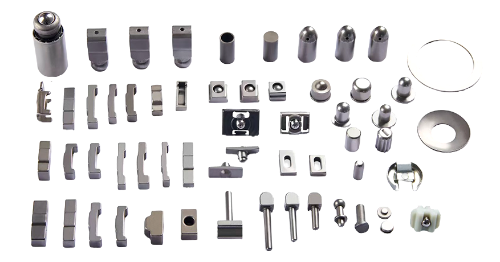
Meanwhile, lightweight technology is gradually penetrating the production of engine components. By using lightweight alloy materials, optimizing design, and improving manufacturing processes, manufacturers can effectively reduce the overall weight of the engine, thereby improving fuel efficiency and overall vehicle performance. In the future, with the development of advanced materials and intelligent manufacturing technologies, innovation in engine components will place greater emphasis on balancing performance and environmental protection.
The manufacturing difficulties of engine components mainly lie in material selection, processing precision, and durability. Because engine components typically need to withstand high temperatures, high pressures, and high speeds, every detail in the manufacturing process requires precise control.
Heat treatment can effectively improve the hardness, strength, and wear resistance of metal parts, ensuring that they maintain good performance and extend their service life in high-temperature and high-pressure working environments.
By selecting high-quality materials, adopting advanced processing technologies (such as CNC machining), implementing strict quality control, and optimizing the design, the performance and reliability of engine parts can be effectively improved.
Lightweight technology can effectively reduce the overall weight of the engine, improve fuel efficiency and power performance, and is one of the important trends in future engine part development.
Quality inspection of engine parts mainly includes dimensional inspection, material analysis, surface hardness testing, and other aspects to ensure that every part meets stringent quality standards.
Your email address will not be published. Required fields are marked *

(+86)-191 0581 0729
(+86)-137 5830 1558