


 English
  Español
  中文简体
中文简体
Product Consultation
Your email address will not be published. Required fields are marked *
Cold Heading Agricultural Machinery Parts: A Foundation for Durability
Aug 06,2025What should you know about synchronizer guide block assembly?
Aug 06,2025Why Bus Gearbox Parts Are Critical for Vehicle Performance?
Aug 06,2025Commercial Vehicle Gearbox Parts: A Comprehensive Guide to Market Trends and Maintenance
Aug 06,2025As the backbone of urban public transportation, the safety, comfort, and fuel efficiency of buses are closely related to their gearbox components. The gearbox is not only a crucial link in power transmission but also key to ensuring smooth driving and economical operation.
Bus gearbox parts can be broadly divided into power transmission components, control mechanisms, and lubrication and cooling systems. Power transmission components are the most critical part of the gearbox, responsible for transmitting engine output torque and performing gear changes. Gears, as the core of power transmission, determine transmission efficiency and smoothness. Gear materials typically use high-strength alloy steel, which is heat-treated and precision-machined to improve wear resistance and fatigue resistance, thus meeting the demands of long-term, high-load operation of buses.
Bearings are equally indispensable in the gearbox. They bear axial and radial loads, ensuring stable gear rotation and reducing friction loss. In modern bus gearboxes, a combination of precision rolling bearings and sliding bearings is used, which not only improves transmission efficiency but also effectively reduces noise and vibration.
The gearbox's shifting mechanism determines the vehicle's power response and driving comfort. Control mechanisms include mechanical, hydraulic, and electronic control systems, and different control methods affect the design and durability of the components. Mechanical control relies on the gear lever, connecting rods, and gear meshing to achieve power switching; the structure is simple but requires high precision of the components. Hydraulic control uses hydraulic oil pressure to drive the shifting actuator, reducing the difficulty of driving operation and extending the life of the components. Electronic control systems achieve precise shifting through sensors and electronic control units, improving fuel economy and power smoothness, but placing higher demands on the response speed of gears, bearings, and actuators.
The synchronizer, as an important component in the shifting process, balances the speed difference between the gears and the shaft, enabling smooth shifting. The friction material and precision design of the synchronizer directly affect the smoothness of shifting and the durability of the gearbox.
The lubrication system is crucial for ensuring the long-term stable operation of gearbox components. The gears, bearings, and synchronizers inside the gearbox generate a large amount of frictional heat during high-speed operation. Insufficient lubrication can lead to premature wear or even damage to the components. High-quality transmission fluid not only reduces the coefficient of friction but also forms a stable oil film on the gear surfaces, reducing direct metal-to-metal contact and thus extending the lifespan of the components.
The cooling system ensures that the oil temperature and component temperatures remain within a reasonable range. Some high-performance transmissions are equipped with oil coolers, which reduce temperature through circulating oil, preventing overheating and thermal stress on gears and bearings. A well-designed lubrication and cooling system allows buses to maintain reliable performance even during prolonged traffic congestion or heavy-load operation.
The reliability of bus gearbox components depends not only on the design but also on the materials and manufacturing processes. Gears are usually treated with carburizing or tempering to enhance surface hardness and wear resistance while maintaining core toughness to prevent fracture. Bearing materials need to possess high compressive strength and fatigue resistance. In modern manufacturing processes, precision CNC machining and heat treatment technologies are widely used to ensure dimensional accuracy and surface finish of components.
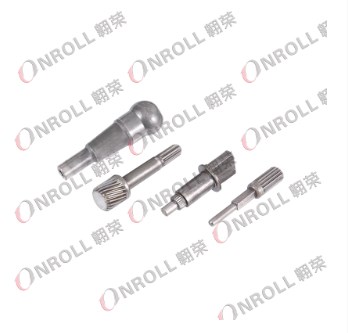
Seals, as important components protecting the internal structure, have materials and designs that directly affect the retention of lubricating oil and dust prevention. High-performance seals effectively prevent oil leakage and dust ingress, extending the overall lifespan of the gearbox.
Even with design and manufacturing reaching industry-leading levels, routine maintenance is still crucial for ensuring the long-term stable operation of the gearbox. Wear on gears and bearings, aging of lubricating oil, and wear of synchronizer friction plates all require regular inspection and maintenance. By monitoring indicators such as oil temperature, noise, and vibration, potential problems with components can be detected in time, preventing small problems from escalating into major failures.
Modern buses are increasingly relying on intelligent detection systems for component maintenance. These systems analyze sensor data to predict wear trends, making maintenance more scientific and precise, extending the overall lifespan of the gearbox and reducing operating costs.
Bus gearbox parts are the core of the vehicle's power system, and their design, materials, and maintenance directly affect vehicle performance, safety, and service life. From gears and bearings to synchronizers, from the lubrication system to the cooling system, every component plays an irreplaceable role. Through precision manufacturing and scientific maintenance, bus gearboxes can continuously provide smooth and reliable power output under high-load conditions.
A: Gears, bearings, synchronizer friction plates, and seals are common wear parts. Their wear and the condition of the lubricant should be monitored during use.
A: Regularly inspect gear and bearing wear, maintain clean and sufficient lubricating oil, and ensure the cooling system is functioning correctly.
A: High-quality components improve transmission efficiency, reduce energy consumption, ensure smooth shifting, and extend the overall service life of the vehicle.
A: The replacement interval should be determined based on vehicle operating conditions and the type of lubricant used. The replacement cycle directly affects the durability of the gears and bearings.
Your email address will not be published. Required fields are marked *

(+86)-191 0581 0729
(+86)-137 5830 1558