


 English
  Español
  中文简体
中文简体
Product Consultation
Your email address will not be published. Required fields are marked *
Cold Heading Agricultural Machinery Parts: A Foundation for Durability
Aug 06,2025What should you know about synchronizer guide block assembly?
Aug 06,2025Why Bus Gearbox Parts Are Critical for Vehicle Performance?
Aug 06,2025Commercial Vehicle Gearbox Parts: A Comprehensive Guide to Market Trends and Maintenance
Aug 06,2025The car engine is the heart of a vehicle, and Car Engine Parts are crucial elements that ensure its efficient operation. From the cylinder block to the camshaft, each part performs an irreplaceable function. For professional technicians and car enthusiasts, a deep understanding of the working principles and performance characteristics of each engine component not only helps improve vehicle maintenance efficiency but also allows for more accurate decisions when purchasing parts.
The cylinder block is the core structure of the engine, and its main function is to withstand the pressure generated by the piston movement and maintain the sealing of the combustion chamber. High-quality cylinder blocks are usually made of aluminum alloy or high-strength cast iron to balance lightweight design and strength. The machining accuracy inside the cylinder block directly affects the engine's durability and power output.
The cylinder head, as the upper structure of the cylinder block, performs multiple functions, including intake and exhaust, cooling, and sealing. The design of the cylinder head requires precise matching with the valve mechanism and combustion chamber structure to ensure complete fuel combustion and efficient airflow. Cylinder head materials are usually high-temperature resistant alloys, undergoing complex processing and heat treatment to ensure long-term stable operation.
The piston is the direct carrier of the engine's combustion energy conversion into mechanical energy, and its movement trajectory determines the engine's compression ratio and output power. Modern pistons are made of high-strength, lightweight materials and are precisely machined to reduce friction and improve thermal efficiency. Piston rings ensure that combustion gases do not leak from the cylinder and control the distribution of lubricating oil, directly affecting the engine's combustion efficiency and durability.
The connecting rod, as the connecting piece between the piston and the crankshaft, is crucial for its strength and rigidity. High-quality connecting rods are usually made of forged steel, undergoing precise heat treatment and surface processing to ensure stability under high load conditions. The rationality of the connecting rod design directly affects the engine's smoothness and power output curve.
The crankshaft is the hub of power transmission in the engine, converting the reciprocating motion of the piston into rotational power. The manufacturing precision of the crankshaft directly determines the engine's balance and vibration level. Crankshafts are usually forged or cast from high-strength steel, and complex heat treatment processes are used to improve fatigue strength and wear resistance.
The flywheel connects the crankshaft to the transmission system and is a key component for smooth engine starting and power storage. The mass and inertia design of the flywheel requires a balance between smooth starting and acceleration response. High-performance engines often optimize flywheel materials and structure to improve power response speed.
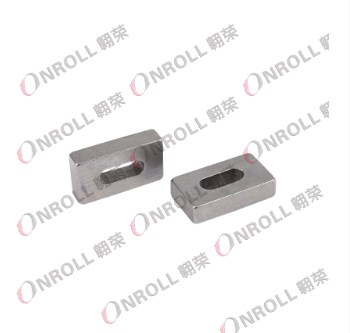
The valve mechanism includes intake and exhaust valves, valve springs, and related drive components. Its main function is to control the amount of intake and exhaust gases in the combustion chamber. The timing of valve opening and closing directly affects engine efficiency and emissions performance. High-performance valves are made of high-temperature alloys and are precision-machined to ensure sealing and wear resistance.
The camshaft is the core of the valve mechanism, responsible for driving the valves to move in precise timing. The camshaft design determines the valve lift, opening and closing speed, and duration, significantly impacting the power curve. Modern engines often optimize camshaft performance through variable valve timing (VVT) technology to balance torque and power output at different engine speeds.
The engine's lubrication system includes the oil pump, oil passages, and oil pan. Its function is to reduce friction, dissipate heat, and remove impurities. Efficient lubrication not only extends engine life but also improves power output efficiency. The choice of engine oil is closely related to the oil passage design; high-quality engine oil maintains stable viscosity even under high temperature and pressure conditions.
The cooling system consists of a water pump, radiator, thermostat, and coolant. It is responsible for controlling engine temperature, preventing overheating or localized temperature anomalies. A well-designed cooling system not only ensures combustion efficiency but also extends the service life of critical components such as the cylinder block, pistons, and valves.
The various components in an engine do not exist in isolation; they achieve overall performance optimization through precise mechanical coordination and dynamic adjustment. The precise collaboration of pistons and connecting rods, crankshaft and flywheel, and valve mechanism and camshaft determines the engine's power output, fuel efficiency, and service life. The material selection, machining accuracy, and surface treatment of each component will have a chain reaction on overall performance. Therefore, understanding the professional knowledge of engine components is crucial for vehicle maintenance, performance optimization, and component selection.
A: Lightweight materials help reduce the inertia of reciprocating motion, improve engine response speed, and reduce fuel consumption and mechanical friction.
A: The precise coordination between valves and camshafts ensures that the combustion chamber takes in and exhausts gases at the correct time, thereby improving combustion efficiency, power output, and smoothness.
A: The lubrication system reduces friction between parts, minimizes wear, dissipates heat, and prevents engine parts from being damaged, which is fundamental to ensuring long-term stable operation.
A: The crankshaft converts piston motion into rotational power, and the flywheel stores inertial energy to ensure smooth engine operation. The design precision of both directly affects power output, smoothness, and acceleration performance.
A: The cylinder head material determines its high-temperature resistance and structural strength, directly affecting engine combustion efficiency and long-term reliability.
Your email address will not be published. Required fields are marked *

(+86)-191 0581 0729
(+86)-137 5830 1558